

Men’s Heat Transfer or DTF Shirt | Your Design
Men’s Heat Transfer or DTF Shirt | Your Design
Couldn't load pickup availability
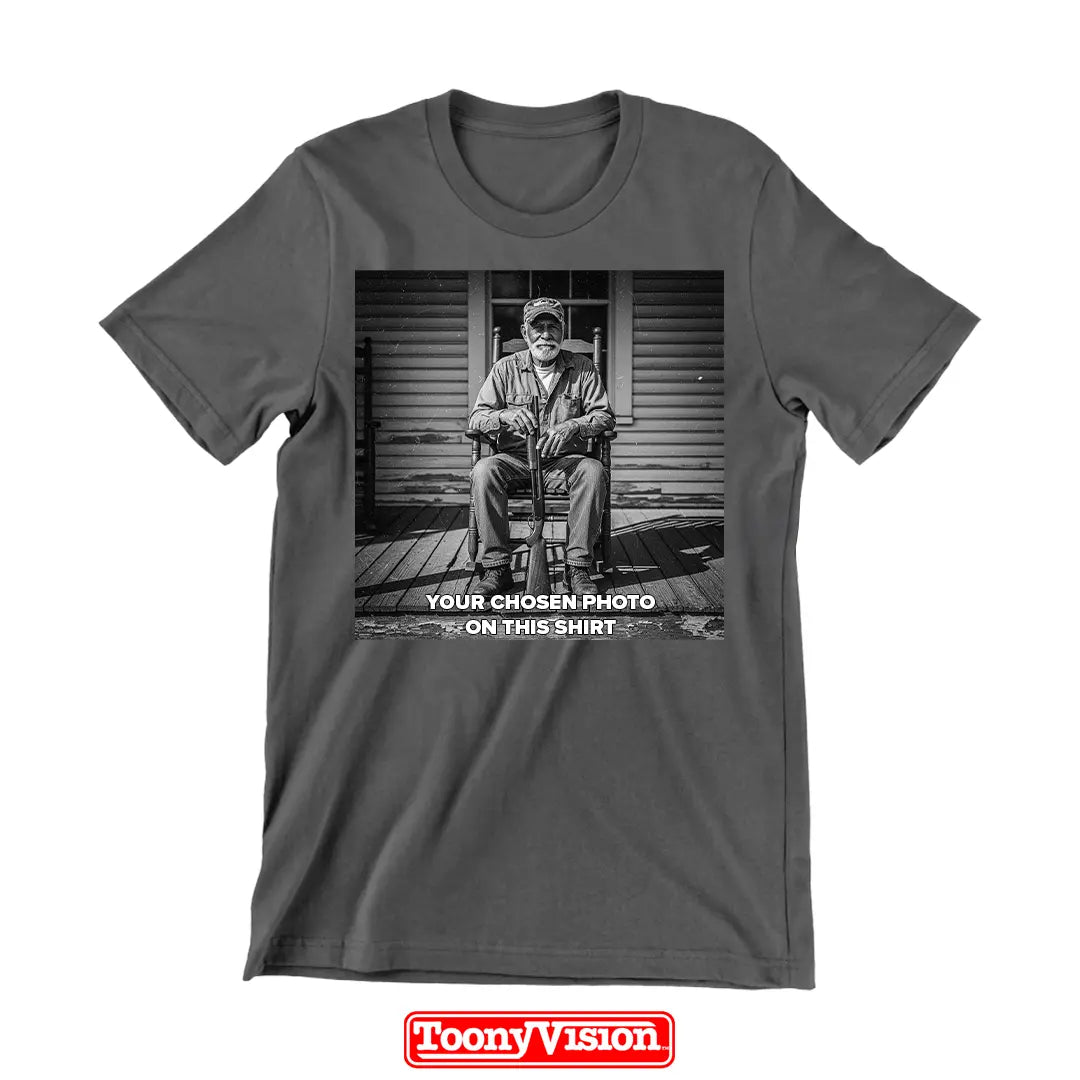
This men’s custom shirt is the comparison-style option for customers who already have their own design, photo, logo, or artwork and want ToonyVision to print it — but still want to choose the finish that best matches the visual. If the design is cleaner, more graphic, and more direct, Heat Transfer is the stronger route. If the artwork has more detail, fuller color, or a more premium merch-style look, DTF is the better upgrade.
Not every design wants the same finish—and you shouldn’t have to guess. This men’s listing is the “choose-your-finish” version of ToonyVision printing: you’ll upload your art (or start from a selfie and let our animators create your character), then you’ll pick the decoration method that fits your goal.
Option one is Heat Transfer Vinyl (HTV)—the classic heat press approach where a vinyl-style graphic is applied with heat and pressure. HTV tends to feel bold and graphic, and it’s widely associated with clean, high-contrast designs like names, numbers, and straightforward logos.
Option two is DTF (direct-to-film)—a modern transfer workflow where the design is printed onto film and then heat-transferred to the garment, often used when you want full-color character art, finer detail, and smoother transitions like gradients.
The ToonyVision piece stays constant either way: the art has to read like real character work. If you’re ordering a cartoon version of you, you’ll see your proof first. If you’re uploading a finished file, we’ll still preview sizing and placement so the final result looks intentional on a real body—not just on a screen.
Because this is custom production, approval is the “lock point.” Once you approve, we move forward with the selected method and print size—no re-working the design after it’s already headed to press.
Men’s garment + print specs (no pricing):
Men’s shirts: Yazbek 100% cotton. Sizes S–3XL.
Print size A (letter): max 21.5 × 28 cm.
Print size B (larger): max 30 × 45 cm.
Artwork file guidelines:
JPG, PNG, or PDF; minimum 800×800 px. High-resolution art at final size is recommended for best clarity (many print guides cite 150–300 DPI; 300 DPI is ideal for detail).

Frequently asked questions
What’s the difference between heat transfer vinyl and DTF printing?
Which option is better for a full-color cartoon portrait?
Which option is usually best for names and jersey-style numbers?
How should I care for my printed shirt after it’s made?
Can I switch methods after I approve the proof?
Can I choose the print method for my own design?
Which option fits simpler graphic artwork best?
Which option fits fuller-color or more detailed art best?